
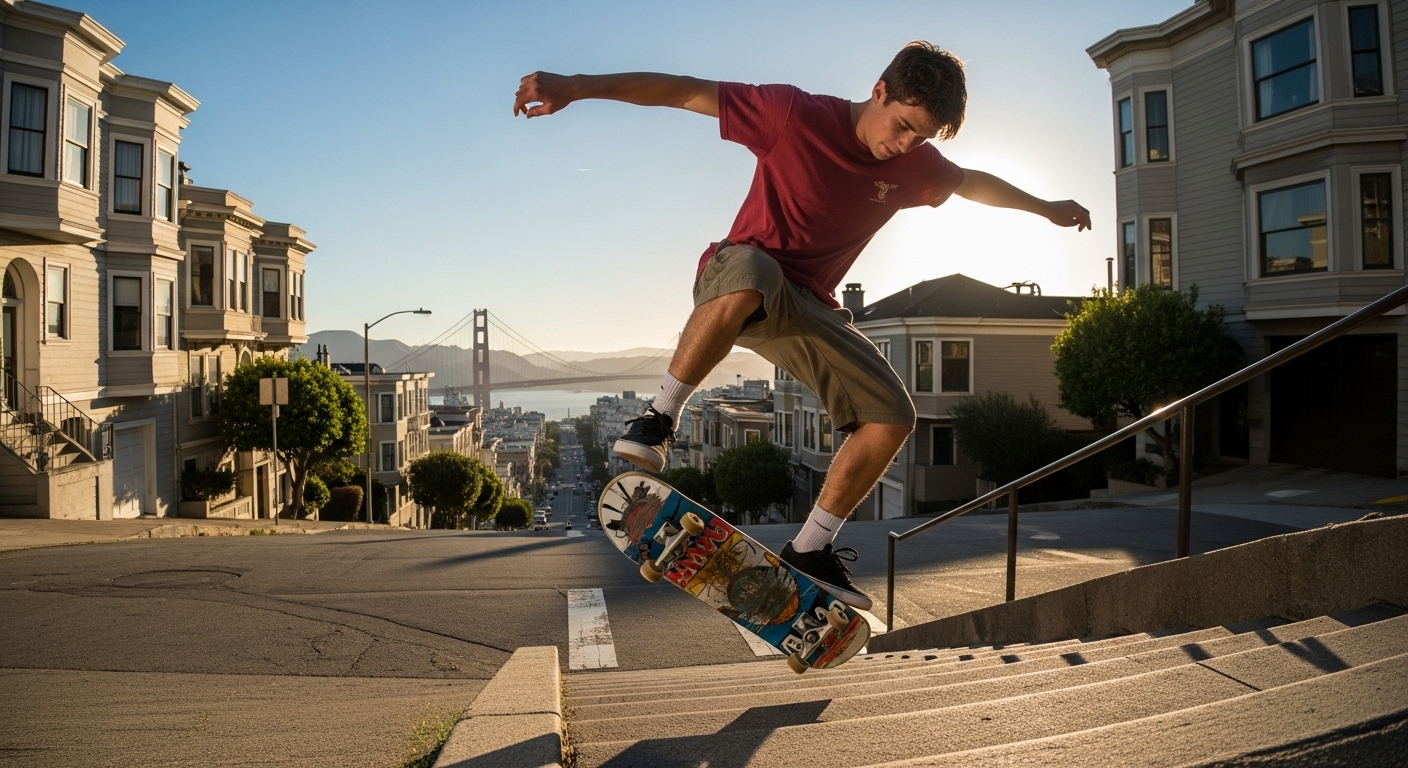
Skateboarding has long been a symbol of rebellion, creativity, and freedom. For decades, it was considered less of a sport and more of a lifestyle, a cultural movement that thrived in city streets, empty pools, and makeshift ramps. What began as a pastime for surfers in search of waves on dry land has transformed into a global phenomenon with professional competitions, massive sponsorships, and even Olympic recognition. The journey of skateboarding from underground counterculture to mainstream sporting event is one of the most fascinating evolutions in modern athletics. It reflects not only changes in society’s perception of sports but also the resilience and creativity of a community that has always stayed true to its roots.
The Origins of Skateboarding
The story of skateboarding begins in California during the 1950s and 1960s when surfers wanted a way to practice their moves when the waves were flat. They began attaching roller skate wheels to wooden boards, creating what was initially called “sidewalk surfing.” The boards were crude by today’s standards, but they allowed riders to mimic the carving and flow of surfing on concrete. The first wave of skateboarding was experimental, and early enthusiasts often built their own equipment.
By the 1960s, skateboarding began to gain popularity as companies started mass-producing boards, leading to the first commercial boom. Magazines featured skateboarders, competitions were organized, and toy companies marketed skateboards to kids. However, the craze faded as quickly as it rose. The equipment was unstable, safety concerns grew, and the mainstream wrote skateboarding off as a fad. Still, a dedicated community of skaters kept the flame alive, experimenting and innovating even when public interest waned.
The Birth of Modern Skateboarding
The 1970s marked the rebirth of skateboarding thanks to a series of technological advancements and cultural shifts. The introduction of urethane wheels revolutionized the sport. Unlike the old metal or clay wheels, urethane offered smoother rides, better grip, and more control. This innovation allowed skaters to expand their creativity, pushing boundaries on rough streets, steep hills, and makeshift ramps.
At the same time, California experienced a drought that left many swimming pools empty. Young skaters, particularly the now-legendary Z-Boys of Dogtown in Santa Monica and Venice, saw these empty pools as opportunities. They began riding the curved walls, inventing new tricks and styles that mimicked surfing but also created something entirely unique. The Z-Boys, including icons like Tony Alva and Stacy Peralta, embodied a gritty, rebellious spirit that reshaped skateboarding forever. Their aggressive, stylish approach gave skateboarding an edge that separated it from other sports.
Skateboarding and Street Culture
By the 1980s, skateboarding was more than a pastime—it was a cultural movement. Street skating emerged as skaters turned urban environments into playgrounds. Handrails, curbs, benches, and stair sets became the new arenas for innovation. This period also saw the rise of professional skateboarding, as companies began sponsoring riders and producing videos that showcased their talents. Skateboarding videos became an art form in themselves, inspiring generations of kids to pick up a board.
Alongside its athletic development, skateboarding grew as a cultural force tied to fashion, music, and art. Punk rock and hip-hop blended with skate culture, creating an identity that was anti-establishment yet influential. Brands like Powell Peralta and Vision became household names among skaters, while magazines like Thrasher championed skateboarding’s raw and unfiltered ethos. The phrase “Skate and Destroy,” popularized by Thrasher, captured the rebellious attitude that defined the scene.
Despite its cultural clout, skateboarding still struggled for mainstream acceptance. Cities often banned skateboarding in public spaces, labeling skaters as nuisances or troublemakers. Law enforcement cracked down on spots, and skaters were stigmatized as delinquents. Yet, the opposition only reinforced the tight-knit community spirit, with skaters embracing their outsider status as a badge of honor.
The Professionalization of Skateboarding
The 1990s marked a pivotal moment in skateboarding’s evolution as it transitioned into a more organized sport while still holding onto its underground roots. Street skating flourished during this decade, with legends like Rodney Mullen inventing tricks that remain the foundation of modern skateboarding. Mullen, often called the godfather of street skating, developed moves like the kickflip, heelflip, and impossible, revolutionizing the technical possibilities of the board.
Professional competitions gained prominence during this era. The introduction of the X Games in 1995 by ESPN was a watershed moment. For the first time, skateboarding was presented as a legitimate sport to mainstream audiences. The X Games showcased skateboarding on a global stage with television coverage, sponsorships, and big prize money. While some within the community resisted the commercialization, the exposure brought opportunities for skaters to make a living from their passion.
The 1990s also saw the rise of influential companies like Girl Skateboards, Element, and Zero, which pushed the industry forward. Skate videos became essential for building reputations, with classics like “Welcome to Hell” and “Mouse” cementing careers and shaping styles. The professionalization of skateboarding meant that young riders could aspire to careers in the sport, something that seemed unthinkable just a decade earlier.
Tony Hawk and the Global Spotlight
No single figure has done more to bring skateboarding into the global mainstream than Tony Hawk. Beginning his career as a vert skater in the 1980s, Hawk became a household name in the 1990s through his dominance in competitions and his media presence. His clean style, technical prowess, and ability to land groundbreaking tricks, such as the legendary 900 spin at the 1999 X Games, captured the imagination of fans worldwide.
Hawk’s influence extended beyond competitions. The release of the Tony Hawk’s Pro Skater video game series in 1999 introduced skateboarding to millions of people who may never have stepped on a board. The game not only entertained but also educated players about real tricks, skaters, and skate culture. For many, the video game was a gateway into the world of skateboarding, fueling the sport’s popularity among young audiences.
Skateboarding’s Struggle for Recognition
Despite its growing visibility, skateboarding long struggled to gain recognition as a legitimate sport. Traditionalists often dismissed it as a hobby or an art form rather than a competition. Skaters themselves were divided, with many resisting attempts to formalize or institutionalize their culture. The free-spirited, DIY nature of skateboarding clashed with the structure and rules associated with conventional sports.
At the same time, skateboarding faced constant challenges in public spaces. Skateparks began to emerge in the 1990s and 2000s as cities sought to provide safe environments for skaters, but the stigma of skateboarding as disruptive persisted. Skaters continued to face bans, tickets, and negative stereotypes. Yet, this resistance only deepened skateboarding’s sense of identity as a counterculture movement.
The Road to the Olympics
The ultimate symbol of skateboarding’s rise as a sport came in 2016 when the International Olympic Committee announced that skateboarding would debut at the 2020 Tokyo Olympics. This milestone represented a dramatic shift in the perception of skateboarding. Once dismissed as an outsider activity, it was now recognized on the world’s largest athletic stage.
The Olympic inclusion was met with mixed reactions within the skateboarding community. Some saw it as validation of decades of hard work and dedication, while others feared that the sport’s authenticity and culture would be compromised by the rigid structure of the Games. Still, the 2020 Olympics showcased skateboarding in a way that honored both its athleticism and creativity. Young stars like Momiji Nishiya and Yuto Horigome captured gold medals, inspiring a new generation of skaters around the world.
The Modern Era of Skateboarding
Today, skateboarding occupies a unique place in global sports culture. It has managed to retain its roots in creativity and counterculture while also thriving as a professional sport. Skateparks exist in cities across the globe, and competitions like Street League Skateboarding bring together the best skaters for high-profile events. Social media has also transformed the landscape, allowing skaters to share their talent directly with audiences without relying solely on traditional competitions or sponsors.
Fashion and art continue to intersect with skateboarding, with brands like Supreme and Palace drawing heavily from skate culture. Music, film, and photography all remain deeply tied to the sport, reflecting its multidimensional identity. What sets skateboarding apart from many other sports is that it is not defined solely by winning or losing but by creativity, style, and personal expression.
The Future of Skateboarding
Looking ahead, skateboarding’s future appears bright. Its inclusion in the Olympics has solidified its status as a global sport, while its cultural influence continues to grow. Skaters today have more opportunities than ever before, from professional careers and sponsorships to creative outlets in media and design. At the same time, the essence of skateboarding—the joy of pushing down the street, landing a trick, or discovering a new spot—remains unchanged.
The rise of skateboarding as a sport is a testament to the resilience and innovation of its community. From makeshift boards in 1950s California to Olympic medals in Tokyo, skateboarding has traveled an extraordinary path. It has proven that a sport can be both rebellious and respected, both creative and competitive. Most importantly, it has shown that skateboarding is more than just a game or a pastime—it is a way of life, a culture, and now, undeniably, a sport that continues to inspire millions worldwide.

